Guide · Cooktop
Wolf Gas Cooktop Replacement Knobs: Finding the Right Match
Written by
Noor Haddad
Cooking-appliance technician — induction and electric · 8 years in the trade
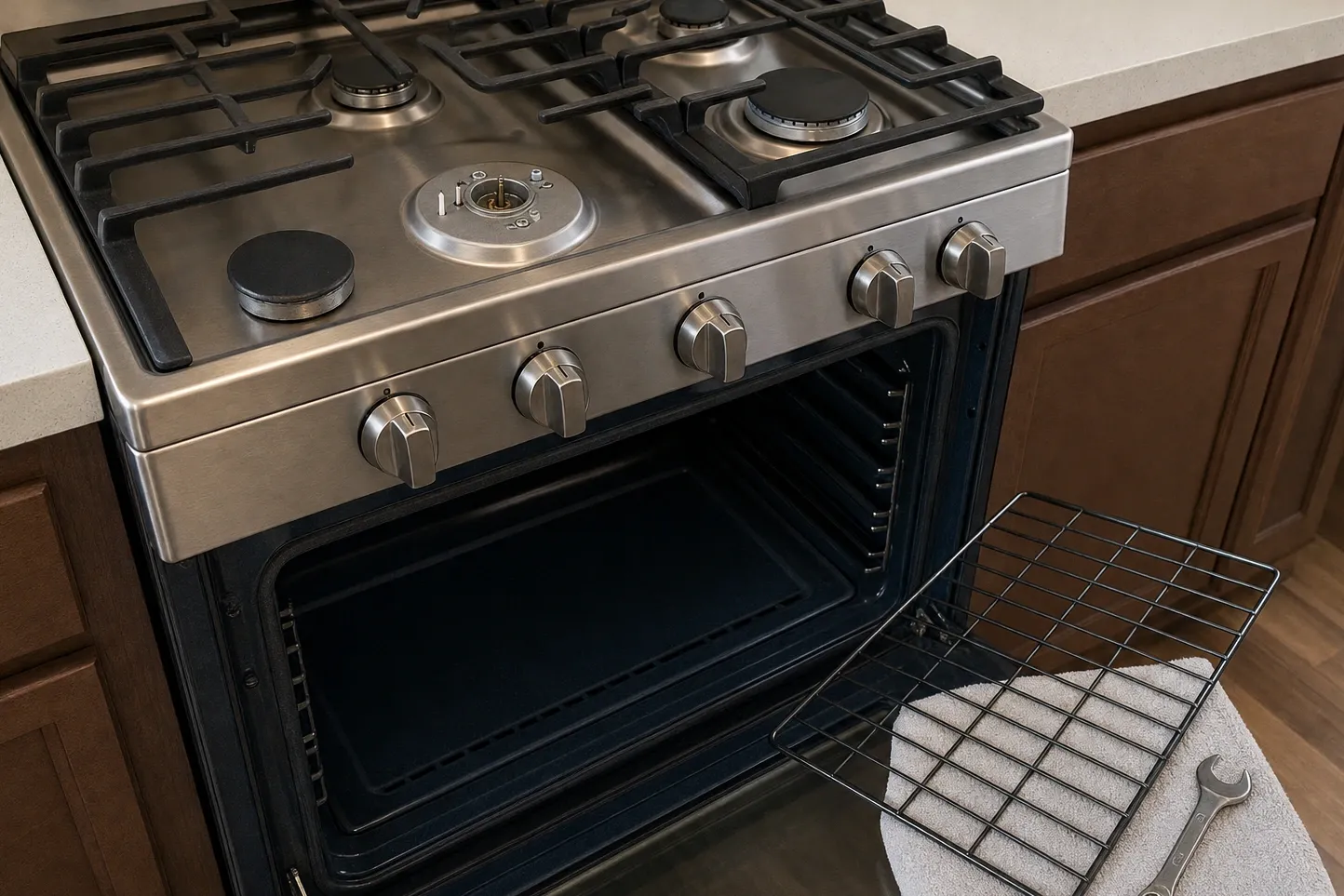
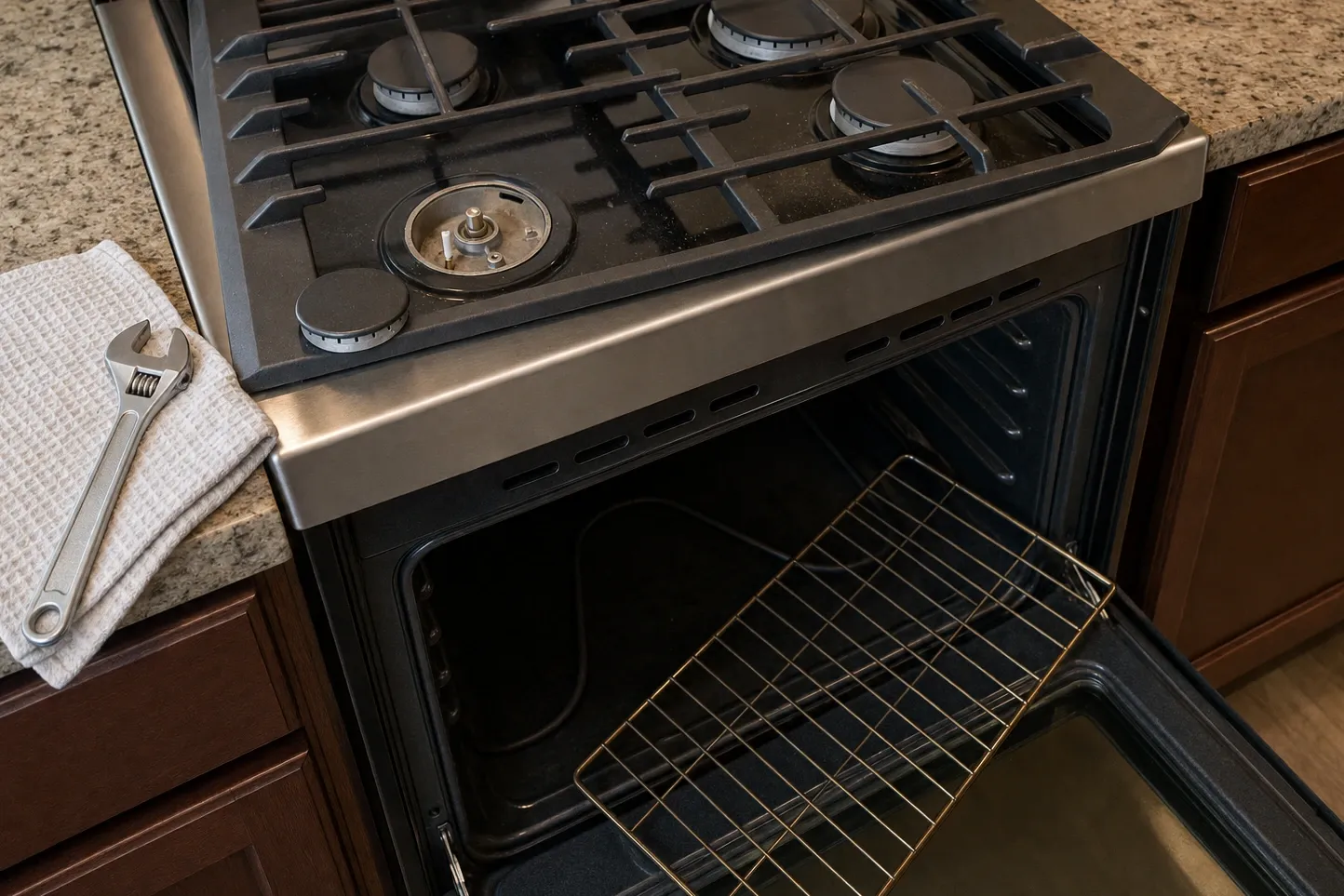
The right replacement knob for a Wolf gas cooktop comes from Wolf’s own parts and accessories store, or from an appliance parts supplier that carries genuine Wolf parts, and it should be ordered against the full model and serial number instead of a photo of the broken one. Those numbers sit on a tag fixed to the underside of the cooktop, so in most Los Angeles kitchens you read them from inside the cabinet or drawer stack below the counter. Do that first and the new knob will match its neighbors, grip the valve stem firmly and point at the setting the burner is really on.
Read the tag before you order anything
Wolf puts the serial tag on the bottom of its cooktops; a flashlight and a phone camera held face-up inside the cabinet will usually capture it.
A model prefix of CG means a gas cooktop, while CI is induction, CE is electric and MM is the multi-function top. A T, P or C in the model marks Transitional, Professional or Contemporary styling, and that letter matters: the three families do not share one knob shape or finish, so a knob that slides onto the stem can still look wrong beside the others.
If your controls sit on the front face of the unit rather than the flat top, you may own a rangetop instead. An SRT rangetop carries its tag at the bottom of the control panel, far right. On the older RT Series, lift out the left surface burner pan and look at the left side wall of the burner box.
That tag and the rating plate also say whether the unit was built for natural gas (NG or NAT) or liquid propane (LP), and a converted unit wears an extra sticker naming its new gas. The knob does not care which fuel it controls, but the valve behind it does, so note it in case the fault runs deeper. Houses on the city gas main in Encino, Mar Vista, Cheviot Hills and Larchmont Village normally run on natural gas.
Where genuine Wolf knobs come from
There are three realistic routes:
- Wolf’s own parts store or customer care. Give them the model and serial and they can tell you which knob belongs to that unit, finish included.
- An appliance parts supplier that stocks genuine Wolf parts. Ask the counter to match the part to your model and serial, not to a loose description such as ‘the red one’.
- Universal or ‘fits Wolf’ knobs from online marketplaces. These cost less, and they are where most fit problems begin.
A gas knob is a safety control, not trim: its socket is shaped to a flat on the valve stem, which keeps the printed marking honest. A loose aftermarket knob can read Off while the valve sits slightly open, or slip so that HI and LO no longer line up with the flame. Cheap plastic never meant to live a few inches from an 18,000 Btu burner, the large burner on Wolf’s 30-inch gas tops, can also soften or craze.
If the old knobs have faded unevenly, consider ordering the whole row, because one crisp new knob beside several worn ones is easy to spot.
Is it the knob, or what sits behind it?
Pull the knob straight off and look at the stem before you buy anything. That single look sorts most cases:
| What you notice | Likely culprit | Typical repair range |
|---|---|---|
| Knob cracked, faded or lettering worn away | The knob itself | Part only |
| Knob spins freely, flat on the stem still sharp | Stripped socket inside the knob | Part only |
| Stem rounded off, bent or snapped | The burner valve | $250–$590 |
| Knob turns stiffly or feels gritty | The burner valve | $250–$590 |
| Burner keeps clicking after the knob is released | Igniter switch or spark module | $170–$410 |
Those ranges are typical figures only; the firm price comes once a technician has diagnosed the cooktop in person.
For a clicking burner, let a wet burner dry (a hairdryer on low helps), make sure each cap sits centered and flat, push the knob in and let go so it springs back, then switch the breaker off for 30 seconds. A knob pressed on too far can hold the igniter switch closed. If none of that stops it, the walkthrough for a burner that clicks without lighting picks up from there.
On a CG Pro cooktop, every knob light flashing for a moment as you turn a burner on is normal, not a sign the new knob is wrong. If the lighting stays dark, reset the breaker and try again before ordering anything.
Fitting a new knob yourself
Swapping a knob needs no tools and takes about a minute:
- Make sure every burner is off and the top has cooled.
- Grip the old knob close to the panel and pull straight toward you. If it is tight, loop a strip of cloth behind it and pull both ends evenly rather than levering against the stainless.
- Note which way the flat on the stem faces, line the new knob up with it and press until it seats fully.
- Check that it reads Off, light the burner at HI, turn it down through the range and shut it off. The flame should follow the marking all the way.
Clean knobs with nothing harsher than a damp cloth, and keep them out of the dishwasher, where heat and strong detergent fade the markings. The grates can go in the sink for a wash in warm soapy water or a scrub with baking soda paste, as long as they are never submerged.
A working knob matters in a blackout too. If the power fails, Wolf’s guidance is to set the knob at HI and hold a multi-purpose lighter to the burner, which is not something to attempt with pliers on a bare stem.
When a knob problem becomes a repair-or-replace decision
A knob alone never justifies a new cooktop. The question changes when the stem belongs to a failing valve, and four things settle it:
- Age. An otherwise sound top is worth a valve service; an old one with several tired valves is a different case.
- Which part. A valve or igniter is a contained repair, and gas burners on a top installed less than five years ago are among the parts Wolf’s limited warranty names.
- How often. A first failure is a repair. A third valve going on the same top within a couple of years suggests the others are close behind.
- What replacement involves. A built-in top has to suit the existing countertop cutout and gas connection, and a new model may not drop into the old opening without cabinet or stone work.
Our page on an older Wolf gas cooktop with tired igniters and valves sets out that choice in more depth.
Getting a second pair of eyes
If you would rather not guess between a knob and a valve, call (310) 742-8625 or use the booking button on this page. A flat $89 covers the visit and the diagnosis, with the burners and the switch tested before anything is written off, and that amount comes off the repair once you approve it. Wolf Repair Pro Los Angeles is an independent service that is not affiliated with Wolf, and you can read more about our Wolf cooktop repair in Los Angeles.
Common follow-ups
Can I put universal knobs on a Wolf gas cooktop?
You can, but genuine Wolf knobs are the safer choice. A universal knob may slip on the valve stem, so the printed marking stops matching the flame and Off no longer proves the valve is closed. Order by model and serial from Wolf's parts store or a supplier of genuine parts, and match the styling letter in the model.
Where is the model number on a Wolf gas cooktop?
Look for the serial tag on the underside of the cooktop, reached from the cabinet or drawers below the counter. Gas models start with CG, and a T, P or C in the number shows Transitional, Professional or Contemporary styling, which decides the knob design. Photograph the whole tag rather than copying it out by hand.
Does the Wolf warranty pay for a cracked or faded knob?
Usually not. The five-year part of Wolf's limited warranty names gas burners, control boards and a handful of other working components, and knobs are not on that list. Cosmetic cover for stainless steel lasts only 60 days. Plan on buying the knob yourself, and save the warranty for burner faults on a newer unit.
Why does my Wolf burner keep clicking after I fitted a new knob?
The new knob is probably pushed on too far and holding the igniter switch closed. Ease it back slightly so it springs out after you press it. If the clicking carries on, let a wet burner dry, check that the caps sit centered and flat, and switch the breaker off for 30 seconds before calling for service.